Cumulative Updates, Development Tips, How To, Information, Instalation & Configuration, NAV 2018, Tip & Tricks, Updates

Cumulative Update 06 for Microsoft Dynamics NAV 2018 (Build 22292) – Released in June 2018

This cumulative update includes all hotfixes and regulatory features that have been released for Microsoft Dynamics NAV 2018, including hotfixes and regulatory features that were released in previous cumulative updates.

This cumulative update replaces previously released cumulative updates. You should always install the latest cumulative update.

It may be necessary to update your license after implementing this hotfix to gain access to new objects included in this or a previous cumulative update (this only applies to customer licenses).

For a list of cumulative updates released for Microsoft Dynamics NAV 2018, see released cumulative updates for Microsoft Dynamics NAV 2018. Cumulative updates are intended for new and existing customers who are running Microsoft Dynamics NAV 2018.

Important

We recommend that you contact your Microsoft Dynamics Partner before you install hotfixes or updates. It is important to verify that your environment is compatible with the hotfixes or updates being installed. A hotfix or update may cause interoperability issues with customizations and third-party products that work with your Microsoft Dynamics NAV solution.

How to obtain the Microsoft Dynamics NAV update files

This update is available for manual download and installation from the Microsoft Download Center.

Download Cumulative update CU 06 for Microsoft Dynamics NAV 2018

How to install a Microsoft Dynamics NAV 2018 cumulative update

See How to install a Microsoft Dynamics NAV 2018 cumulative update.

Prerequisites

You must have Microsoft Dynamics NAV 2018 installed to apply this hotfix.

For more details see: https://support.microsoft.com/en-us/help/4337675/cumulative-update-06-for-microsoft-dynamics-nav-2018-build-22292
Cumulative Updates, Development Tips, How To, Information, Instalation & Configuration, NAV 2018, Tip & Tricks, Updates

Cumulative Update 05 for Microsoft Dynamics NAV 2018 (Build 21836) – Released in May 2018

released cumulative updates for Microsoft Dynamics NAV 2018This cumulative update includes all hotfixes and regulatory features that have been released for Microsoft Dynamics NAV 2018, including hotfixes and regulatory features that were released in previous cumulative updates.

This cumulative update replaces previously released cumulative updates. You should always install the latest cumulative update.

It may be necessary to update your license after implementing this hotfix to gain access to new objects included in this or a previous cumulative update (this only applies to customer licenses).

For a list of cumulative updates released for Microsoft Dynamics NAV 2018, see released cumulative updates for Microsoft Dynamics NAV 2018. Cumulative updates are intended for new and existing customers who are running Microsoft Dynamics NAV 2018.

How to obtain the Microsoft Dynamics NAV update files

This update is available for manual download and installation from the Microsoft Download Center.

Download Cumulative update CU 05 for Microsoft Dynamics NAV 2018

How to install a Microsoft Dynamics NAV 2018 cumulative update

See How to install a Microsoft Dynamics NAV 2018 cumulative update.

Prerequisites

You must have Microsoft Dynamics NAV 2018 installed to apply this hotfix.

For more information see : https://support.microsoft.com/en-us/help/4171921/cumulative-update-05-for-microsoft-dynamics-nav-2018-build-21836

Cumulative Updates, Development Tips, How To, Information, Instalation & Configuration, NAV 2018, Tip & Tricks, Updates

Cumulative Update 04 for Microsoft Dynamics NAV 2018 (Build 21441) – Released in April 2018

This cumulative update includes all hotfixes and regulatory features that have been released for Microsoft Dynamics NAV 2018, including hotfixes and regulatory features that were released in previous cumulative updates.

This cumulative update replaces previously released cumulative updates. You should always install the latest cumulative update.

It may be necessary to update your license after implementing this hotfix to gain access to new objects included in this or a previous cumulative update (this only applies to customer licenses).

For a list of cumulative updates released for Microsoft Dynamics NAV 2018, see released cumulative updates for Microsoft Dynamics NAV 2018. Cumulative updates are intended for new and existing customers who are running Microsoft Dynamics NAV 2018.

How to obtain the Microsoft Dynamics NAV update files

This update is available for manual download and installation from the Microsoft Download Center.

Download Cumulative update CU 04 for Microsoft Dynamics NAV 2018

How to install a Microsoft Dynamics NAV 2018 cumulative update

See How to install a Microsoft Dynamics NAV 2018 cumulative update.

Prerequisites

You must have Microsoft Dynamics NAV 2018 installed to apply this hotfix.

For more details see: https://support.microsoft.com/en-us/help/4100770/cumulative-update-04-for-microsoft-dynamics-nav-2018-build-21441

Cumulative Updates, Development Tips, How To, Information, Instalation & Configuration, NAV 2018, Tip & Tricks, Updates

Cumulative Update 03 for Microsoft Dynamics NAV 2018 (Build 20783) – Released in March 2018

This cumulative update includes all hotfixes and regulatory features that have been released for Microsoft Dynamics NAV 2018, including hotfixes and regulatory features that were released in previous cumulative updates.

This cumulative update replaces previously released cumulative updates. You should always install the latest cumulative update.

It may be necessary to update your license after implementing this hotfix to gain access to new objects included in this or a previous cumulative update (this only applies to customer licenses).

For a list of cumulative updates released for Microsoft Dynamics NAV 2018, see released cumulative updates for Microsoft Dynamics NAV 2018. Cumulative updates are intended for new and existing customers who are running Microsoft Dynamics NAV 2018.

How to obtain the Microsoft Dynamics NAV update files

This update is available for manual download and installation from the Microsoft Download Center.

Download Cumulative update CU 03 for Microsoft Dynamics NAV 2018

How to install a Microsoft Dynamics NAV 2018 cumulative update

See How to install a Microsoft Dynamics NAV 2018 cumulative update .

Prerequisites

You must have Microsoft Dynamics NAV 2018 installed to apply this hotfix.

For more details see: https://support.microsoft.com/en-us/help/4091307/cumulative-update-03-for-microsoft-dynamics-nav-2018-build-20783

Cumulative Updates, Development Tips, How To, Information, Instalation & Configuration, NAV 2018, Tip & Tricks, Updates

Cumulative Update 02 for Microsoft Dynamics NAV 2018 (Build 20348) – Released in Feb 2018

This cumulative update includes all hotfixes and regulatory features that have been released for Microsoft Dynamics NAV 2018, including hotfixes and regulatory features that were released in previous cumulative updates.

This cumulative update replaces previously released cumulative updates. You should always install the latest cumulative update.

It may be necessary to update your license after implementing this hotfix to gain access to new objects included in this or a previous cumulative update (this only applies to customer licenses).

For a list of cumulative updates released for Microsoft Dynamics NAV 2018, see released cumulative updates for Microsoft Dynamics NAV 2018. Cumulative updates are intended for new and existing customers who are running Microsoft Dynamics NAV 2018.

How to obtain the Microsoft Dynamics NAV update files

This update is available for manual download and installation from the Microsoft Download Center.

Download Cumulative update CU 02 for Microsoft Dynamics NAV 2018

How to install a Microsoft Dynamics NAV 2018 cumulative update

See How to install a Microsoft Dynamics NAV 2018 cumulative update .

Prerequisites

You must have Microsoft Dynamics NAV 2018 installed to apply this hotfix.

For more details see:- https://support.microsoft.com/en-us/help/4078580/cumulative-update-02-for-microsoft-dynamics-nav-2018-build-20348

Cumulative Updates, Development Tips, How To, Information, Instalation & Configuration, NAV 2018, Tip & Tricks

Cumulative Update 01 for Microsoft Dynamics NAV 2018 (Build 19846) – Released in Jan 2018

This cumulative update includes all hotfixes and regulatory features that have been released for Microsoft Dynamics NAV 2018, including hotfixes and regulatory features that were released in previous cumulative updates.

This cumulative update replaces previously released cumulative updates. You should always install the latest cumulative update.

It may be necessary to update your license after implementing this hotfix to gain access to new objects included in this or a previous cumulative update (this only applies to customer licenses).

For a list of cumulative updates released for Microsoft Dynamics NAV 2018, see released cumulative updates for Microsoft Dynamics NAV 2018. Cumulative updates are intended for new and existing customers who are running Microsoft Dynamics NAV 2018.

How to obtain the Microsoft Dynamics NAV update files

This update is available for manual download and installation from the Microsoft Download Center.

Download Cumulative update CU 01 for Microsoft Dynamics NAV 2018

How to install a Microsoft Dynamics NAV 2018 cumulative update

See How to install a Microsoft Dynamics NAV 2018 cumulative update .

Prerequisites

You must have Microsoft Dynamics NAV 2018 installed to apply this hotfix.

For more details see :- https://support.microsoft.com/en-us/help/4058601/cumulative-update-01-for-microsoft-dynamics-nav-2018-build-19846

Azure, Development Tips, Dynamics 365, Functional Tips, How To, Image Analyzer, Information, Instalation & Configuration, NAV 2018, Tip & Tricks, What's New

Image Analysis feature in Dynamics NAV 2018

In Dynamics NAV 2018, the Image Analyzer extension uses the Computer Vision API to analyze images that are attached to contact persons and items.

For example, this is useful for items because it lets you build up a stockpile of metadata about what you sell and use it to fine-tune search results when someone is browsing your web shop.

Image Analyzer is free in Dynamics NAV, but there is a limit to the number of items that you can analyze during a certain period of time. By default, you can analyze 100 images per month.

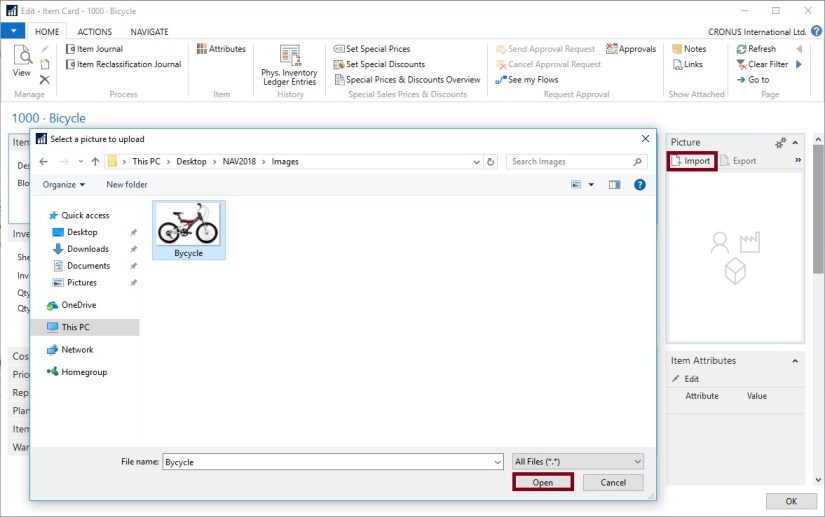
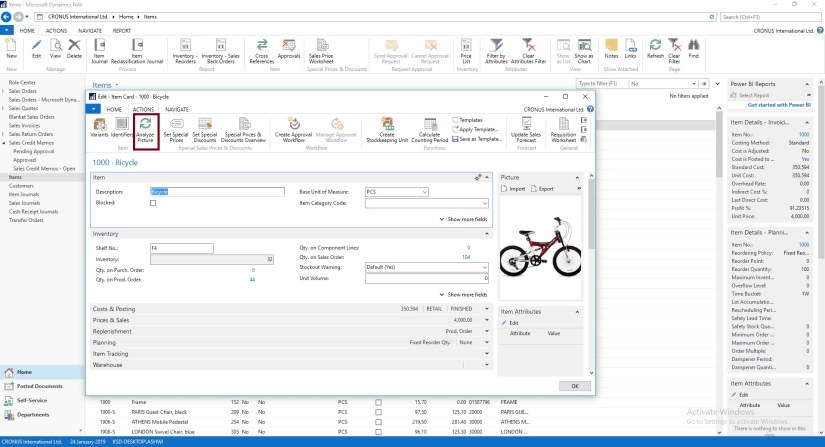
After you enable the extension, Image Analyzer runs each time you import an image to an item or contact person. You will see the attributes, confidence level, and details right away, and can decide what to do with each attribute. If you imported images before you enabled the Image Analyzer extension, you must go to the item or contact cards and choose the Analyze Picture action.

Requirements

There are a few requirements for the images:

  • Image formats: JPEG, PNG, GIF, BMP
  • Maximum file size: Less than 4 MB
  • Image dimensions: Greater than 50 x 50 pixels

How to enable Image Analyzer

To enable the Image Analyzer extension, do one of the following:

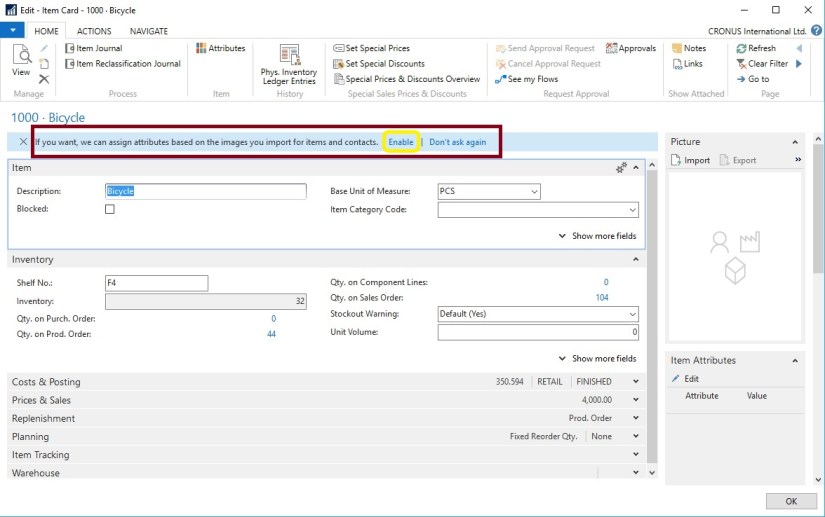
Method-1 : Open an item or contact card. In the notification bar, choose Analyze Images, and then follow the steps in the assisted setup guide.


IA-1

This will launch Image Analyser assisted setup guide, follow the step.


IA-2

IA-3

IA-4

Once you are done It will import your image for Analysing.

IA-5


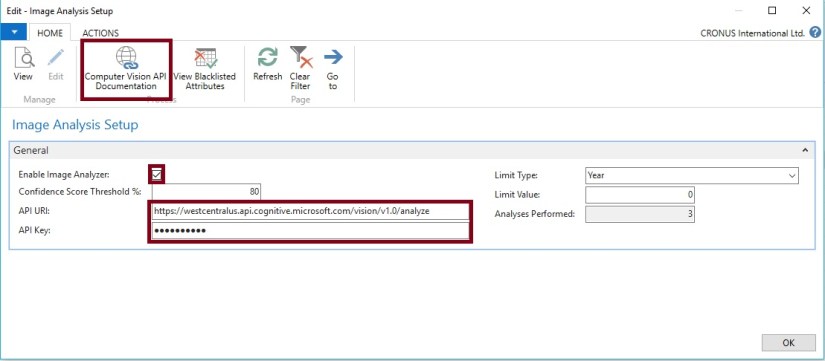
Method-2 : Access the Service Connections, and then choose Image Analysis Setup.

IA-5.1

Choose the Enable Image Analyzer check box, and then complete the steps in the assisted setup guide.

IA-5.2

For URL and Key follow these steps:

Click on Computer Vision API Documentation

IA-6

Click on Try Computer Vision API

IA-7

Select your API Computer Vision API and then Get API Key

IA-8

Agree to T & C select your Country/Region and then Next

IA-9

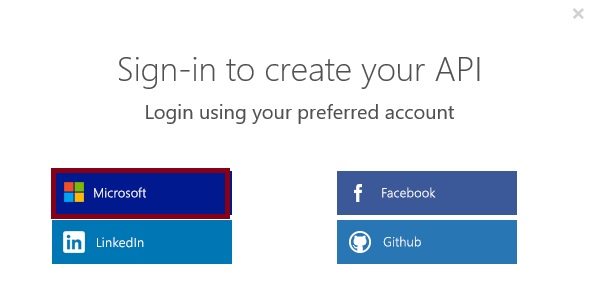
Sign-In with the preferred account sign-in method

IA-10

Once done you will land on page which will have your Endpoint URL and Key

You must add /analyze at the end of the API URI, if it isn’t already there.

IA-11

Enter your Endpoint URL and Key and close the window.

IA-12

Now you import your Image, or select Analyze Picture if already imported

IA-13

This will analyze the Image and provide you with the Attributes.

The Image Analyzer Attributes page displays the detected attributes, the confidence level, and other details about the attribute. Use the Action to perform options to specify what to do with the attribute.


This is how you enable and configure your Image Analyzer Service.


To see how many analyses you have left in the current period

You can view the number of analyses you’ve done, and how many you can still do, in the current period.

Enter Image Analyzer Setup, and then choose the related link.

The Limit type, Limit value, and Analyzes performed provide the usage information.


To stop using the Image Analyzer extension

Enter Service Connections, and then choose Image Analyzer Setup.

Clear the Enable Image Analyzer check box.


I will come with more details as I proceed.


Dynamics 365, How To, Information, Modern Development Tool, NAV 2018, Tip & Tricks, Updates, What's New

NAV Development Preview – Modern Development Tools for Dynamics NAV

Dear friends, after writing blog on Modern Development Tools for Dynamics NAV few of my readers requested to compile all information related to this in single blog.

Here are the links related to these posts, not all are my but are useful and will help keep you updated on same.

Extensions 2.0

Configuring Visual Studio Code

Below are the helpful other links from Microsoft Dynamics NAV Team

How do I learn more?

Check out these docs:

Tools overview

Getting Started guide

Object overview and AL language changes

Modern Development Tools Updates

released from launch till Dec 2017

Modern Development Tools for Dynamics NAV

NAV Development Tools Preview – January Update

NAV Development Tools Preview – February Update

NAV Development Tools Preview – March Update

NAV Development Tools Preview – April Update

NAV Development Tools Preview – June Update

NAV Development Tools Preview – July Update

NAV Development Tools Preview – August Update

NAV Development Tools Preview – September Update

NAV Development Tools Preview – October Update

NAV Development Tools Preview – November Update

NAV Development Tools Preview – December Update

Hope you find this information useful in understanding and learning the new Modern Development Tool for Dynamics NAV 2018.


Development Tips, Dynamics 365, Extension Package, How To, Information, NAV 2018, Tip & Tricks, What's New

Extensions 2.0 – Dynamics Navision 2018

The issue with customizations is that they often introduce challenges when upgrading. It’s hard to upgrade a solution from one version to the next when changes have been made to the underlying solution. Extensions, and the new version – Extensions 2.0 – solves this problem.

Instead of defining customizations in the original source code, extensions are written alongside the solution source, where the integration with the source is handled with events. An extension can add new objects and extend existing objects that are present in the solution. The extension code is packaged in a file, which you can deploy to your solution. This allows us to upgrade the underlying solution and, as long as the events remain, the extension will behave in the same way from version to version.

To help you developing solutions for this new programming pattern, you can use the new developer tools to build, test, and deploy extensions.


In app designer

In the client, you can switch to the in app designer mode that provides a way for you change the look and feel of the client easily and quickly. In short, the in-client designer lets you define what elements (such as fields, groups) appear on a page and how they are arranged. The in-client designer also provides an interactive way to create extensions based on changes you make in the client. Some of the features include:

  • Adding a field from the source table to a page.
  • Moving a field to another place on a page.
  • Removing a field from a page.
  • Previewing your design in desktop, tablet, and phone clients.
  • Saving the changes for the tenant or saving as an extension package file in Visual Studio Code.
  • Changing the caption of a fields on the page.
  • Adding, moving, renaming, and removing an action.
  • Adding, moving, and removing page parts.
  • Adding new pages.


Personal and organizational design changes

As an end user, changes can be applied so that only the user who made the changes will see them. This enables users to personalize the pages for their role. Examples of personalization could include moving important fields to a more prominent position on the page, or renaming a date field so that it is clearer which field is the ship date versus the expected arrival date. Alternatively, as an administrator, changes can be made globally, so that everyone in the organization can see them.

Business consultants can also access the same tools to help customers make changes to their solution, resulting in improvements in productivity for all users. For example, they could add new actions to run custom reports, or introduce entirely new pages or page parts.


Working with the In App Designer

To turn on the In-App Designer, start the client as normal, and then simply choose the In-App designer icon in the ribbon on any page in the client.


ExtV2-1

The Design mode bar appears at the top page, indicating that the in-client designer is active. You can now open any page, and start making changes.

ExtV2-2

Choose More to display additional design options, such as adding a field, creating a new field, and changing the preview to another client type.

ExtV2-3


ExtV2-4

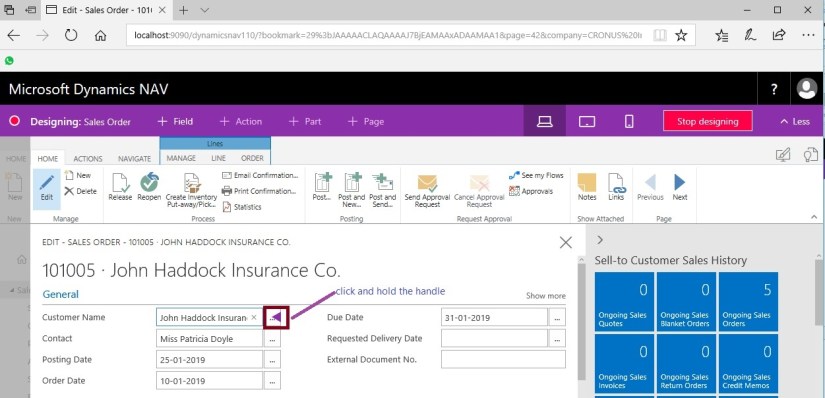
To move a field, click and hold the handle in the field to drag and drop it from its current position to the new location, as indicated by the horizontal line.

ExtV2-5

To remove a field, click the field’s handle, and then choose Remove.

ExtV2-6

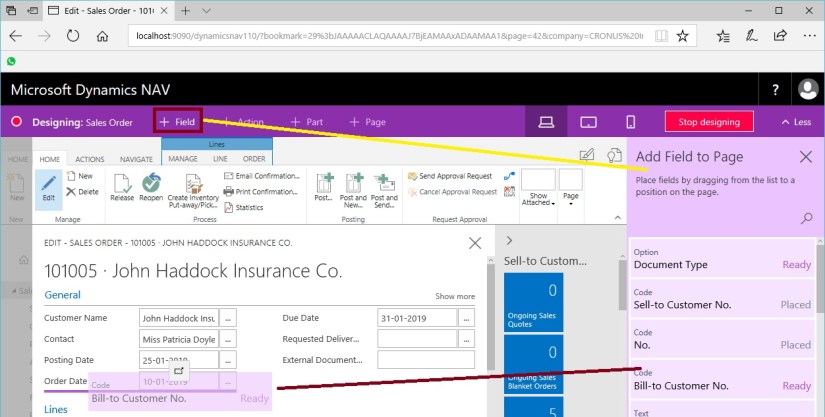
To add a field, choose the Field button, and then drag and drop a field from the list that appears to the desired location.

ExtV2-7

To preview in another client type, simply choose one of the preview buttons.

When you are finished making changes, choose Stop Designing. You then have the option to save the changes to the tenant for all users, or to save the changes to a file that you can work on later in Visual Studio Code.

ExtV2-8

You can see that Extension is deployed on your solution, check as below.

ExtV2-9

Hope you will enjoy using this new feature of development.

Will come with more details as I proceed.

Development Tips, Dynamics 365, Extension Package, How To, Information, Instalation & Configuration, NAV 2018, Tip & Tricks, Visual Studio Code, What's New

Configuring Visual Studio Code to Use Modern Development Environment with Dynamics NAV 2018

After installing Dynamics NAV 2018, I want to configure Visual Studio Code with Dynamics NAV to use new Development tool.

Before we start lets verify few things and update accordingly.

NDE-1

You can download VS Code from here:-Click to download Visual Studio Code

Install and Launch the Visual Studio Code.

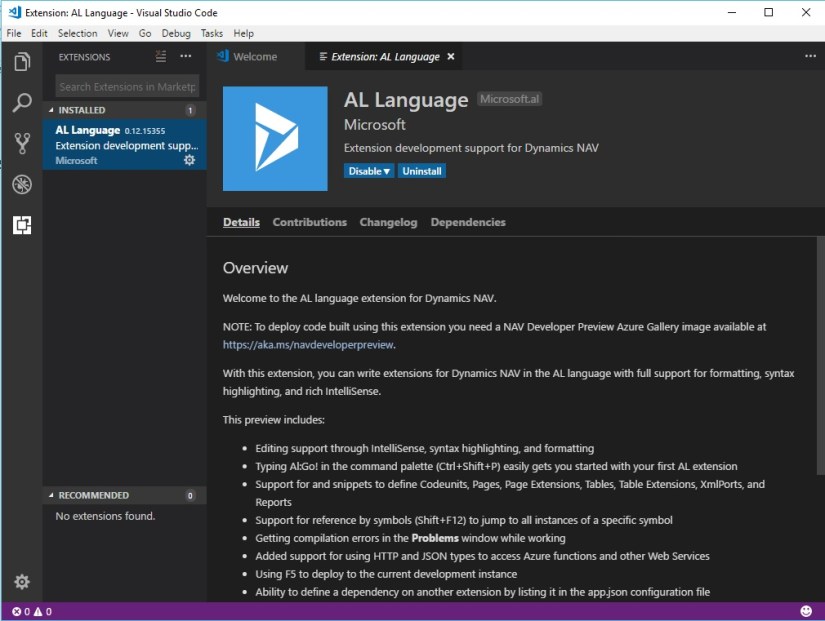
Now Click View -> Extensions.

NDE-2

Click on … to open the extension menu.

Click on Install from VSIX

NDE-3

You can find VSIX file on the installation medium path:

“ModernDev\program files\Microsoft Dynamics NAV\110\Modern Development Environment”

or in the

“C:\Program Files (x86)\Microsoft Dynamics NAV\110\Modern Development Environment”

NDE-4

This will install AL Language Version 0.12.15355

NDE-5

Once the Extension installation is complete, follow below steps

Press Alt+A, Alt+L to trigger the Go! Command

NDE-6

Enter Project Name and Press Enter

NDE-7

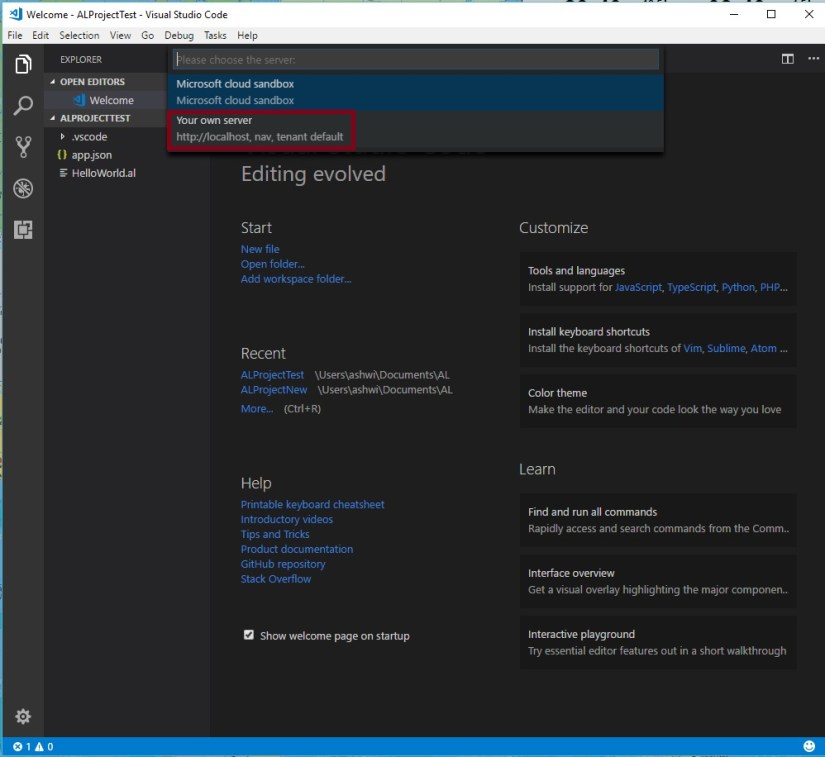
Choose “Your own server”

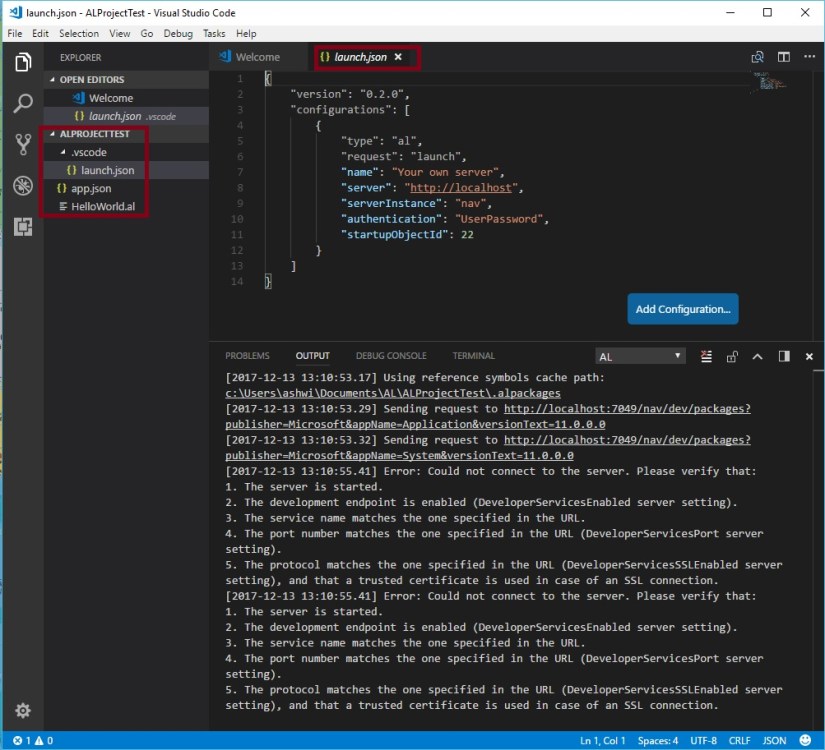
Once you select the “Your own server” you will see a code like below in the “launch.json” file.

NDE-8

Update the information to look similar to below:-

NDE-9

I have updated my ServerInstance as DynamicsNAV110 (you check your instance name if changed while installing server)

I have updated my Authentication as Windows (I am using Windows authentication update what yours use accordingly)

I have added Port as 8049 (please check and use accordingly you are using the port, if using default 7049 then this step not required)

Now save your File. And Press <CTRL + F5>.

NDE-12

Enter your Credentials.

The server url and the web client url are assumed to be the same. That is not the case. The two settings we talked about above, the server url and the developer port number, are the only settings you need in the launch.json.

When VS Code publishes the extension to the NAV server, the NAV server returns the web client url as a response. This url is then opened in the browser. No setting needed in the launch.json at all.

The NAV server reads that setting from the Web Client Base Url server setting.

NDE-13

NDE-11

Your Extension is published, you can verify as below:

NDE-10

Now you are good to go with developing your Extensions using New Modern Development Tool using AL.

I hope this may have clarified your doubt on how VS Code and the NAV server work together!

I will come with more details as I proceed.